


Ask the Experts24/7 Online Support
Ask the Experts24/7 Online Support
India |
December 26, 2025 | 15:14 PM
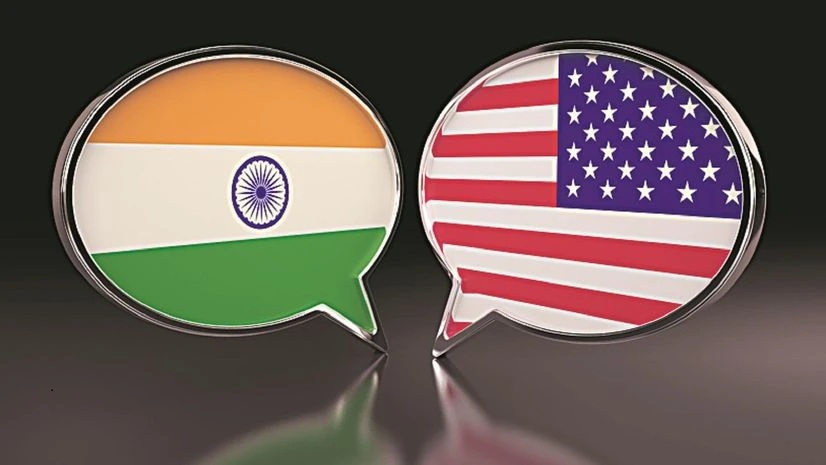
New Delhi, December 26, 2025 — India and the United States are in active discussions regarding New Delhi’s potential inclusion in the Pax Silica supply chain initiative, a US-led strategic framework designed to secure global supply chains for silicon, semiconductors, critical minerals, and artificial intelligence infrastructure.
The talks signal a deepening of India-US economic and technology cooperation at a time when global supply chains are being reshaped due to geopolitical tensions, export controls, and rising demand for advanced technologies.
Pax Silica is a strategic technology and supply-chain alliance launched by the United States in December 2025. The initiative aims to create a trusted, resilient, and secure ecosystem for silicon-based technologies, covering the entire value chain:
Critical minerals and raw materials
Silicon and semiconductor manufacturing
Advanced chip fabrication
AI computing infrastructure
Energy and logistics supporting tech manufacturing
The initiative is widely viewed as part of Washington’s broader effort to reduce global dependence on China-centric technology supply chains and strengthen collaboration among trusted partner nations.
The original group includes:
United States
Japan
South Korea
United Kingdom
Netherlands
Singapore
Israel
United Arab Emirates
Australia
These countries collectively dominate key segments of the global semiconductor and advanced manufacturing ecosystem.
India’s potential entry into Pax Silica could be strategically transformative for both sides.
Large and rapidly growing electronics and semiconductor demand
Expanding AI, data center, and digital infrastructure
Strong base in engineering talent and software
Government-backed semiconductor and manufacturing incentives
While India is still developing advanced chip fabrication capabilities, it plays an increasingly critical role in design, assembly, testing, packaging, and downstream electronics manufacturing.
India’s absence from the founding group sparked debate across policy and industry circles. According to analysts, key reasons include:
Limited presence in advanced lithography and high-end chip fabrication
Pax Silica’s early focus on countries already deeply embedded in cutting-edge semiconductor manufacturing
Alignment requirements related to export controls, technology security, and investment screening
However, US officials have clarified that India’s exclusion was not political and that the initiative is designed to expand in phases.
US Undersecretary of State for Economic Affairs Jacob Helberg confirmed that Washington is actively exploring India’s inclusion in Pax Silica as the framework evolves.
He also announced that senior US officials will participate in the IndiaAI Impact Summit scheduled for February 2026, underlining growing cooperation in AI, digital infrastructure, and critical technologies.
This signals that India is being viewed as a long-term strategic partner, even if it was not part of the initial rollout.
If India joins Pax Silica, the potential benefits could be significant:
Participation could accelerate:
Foreign direct investment (FDI) in chip manufacturing
Joint ventures with global semiconductor leaders
Technology transfer and skills development
India would gain deeper integration into:
Trusted global supply chains
Critical mineral sourcing networks
Advanced manufacturing logistics
With AI workloads driving demand for high-performance chips, India’s role as a data center and AI hub could expand substantially.
Pax Silica reflects a broader global trend where technology, economics, and geopolitics are increasingly intertwined.
Countries are forming “trusted tech blocs”
Supply chains are being re-engineered for resilience
Control over semiconductors and AI infrastructure is becoming a strategic priority
India’s inclusion would mark a major step in its integration into Western-aligned technology ecosystems, while still maintaining its policy of strategic autonomy.
While no formal timeline has been announced, officials indicate that India’s potential entry could be discussed further in 2026, depending on policy alignment and sector-specific cooperation.
Key areas to watch:
Semiconductor policy coordination
Critical mineral partnerships
AI governance and infrastructure
Trade and investment frameworks
India-US talks on joining the Pax Silica supply chain underscore India’s rising importance in the global technology order. While challenges remain, the discussions highlight a shared interest in building secure, diversified, and future-ready supply chains for semiconductors and AI.
As global competition for technological leadership intensifies, India’s potential inclusion in Pax Silica could shape the next phase of global supply chain realignment.
Comments (0)
No record(s) Found !